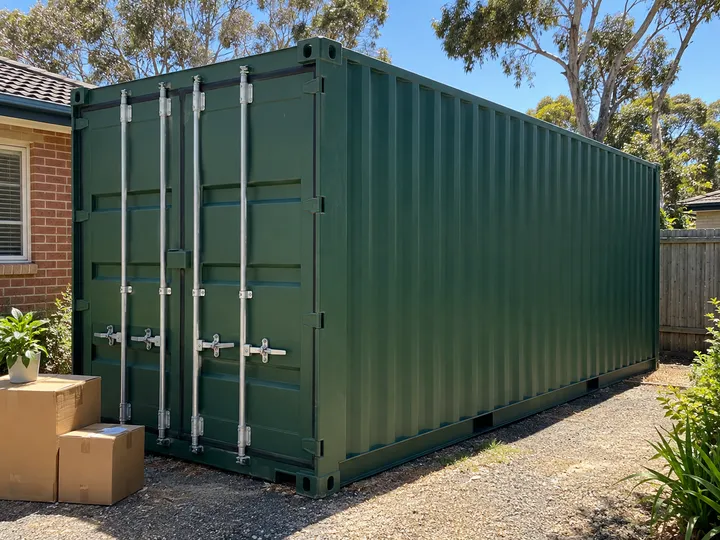
What we need to know
Send your delivery suburb, container size and intended position. Tell us about narrow streets, gates, tight turns, slopes, soft ground, overhead services and any site booking requirements. Photos from the road through to the final position are helpful.
Truck space is different from container space
The container footprint is only part of the picture. The truck needs a suitable approach, room to turn and room to unload. Send photos of the road, gate, driveway and placement area. Flag slopes, soft ground, branches and overhead services so the transport team can assess the job.
The unloading method affects the space needed beside and behind the truck. Do not rely on a generic clearance figure: the transport team needs to assess your site and the actual delivery arrangement.
Choose the position carefully
Think about door swing, the direction you want the doors facing, access to stored items and how water moves around the site. Keep the position clear. Discuss site preparation and any supports or anchoring with appropriately qualified people before delivery.
Before the truck is booked
Check any council, property-owner or site requirements for the address and intended use. Storage and a converted building can be treated differently. Ground preparation, supports and anchoring depend on the site and need appropriately qualified advice.
Confirm the delivery charge, vehicle arrangements and what happens if access or conditions change. Let us know promptly if rain, site works or parked vehicles could affect the job.
On the day
Have the agreed access area ready and a contact person available. Follow the driver’s directions and keep people clear of the unloading area. Never approach or stand beneath a suspended load.